Price €155.00
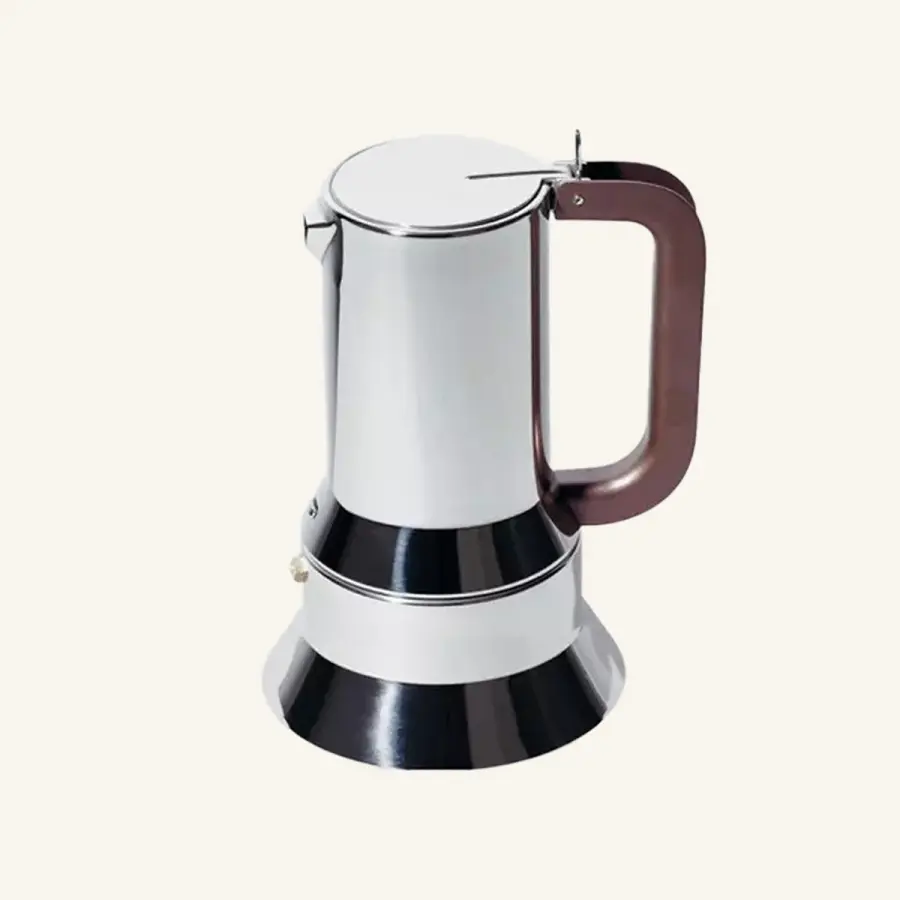
Alessi 9090 Moka Pot - 1 cup
ALESSI
€5 voucher
The moka pot is much more than a simple piece of kitchen equipment: it is a coffee ritual, an invitation to slow down and let the coffee express its character. With an Italian coffee maker, every morning becomes a sensory journey, from the first wisps of steam to the generous cups of coffee shared and enjoyed at your own pace.
The Bialetti moka pot remains an iconic reference for this legendary brewing method, but other models are also worth discovering. Complete your coffee setup with our manual coffee makers, filter coffee makers, coffee grinders and coffee accessories to create your ideal home coffee setup.
Explore our selection of moka pots and discover this timeless Italian coffee brewing method.
There is 1 product.
ALESSI
€5 voucher
The moka pot, also known as an Italian coffee maker, uses a remarkably simple brewing system. As the water in the lower chamber heats up, pressure forces it through the ground coffee in the filter basket before the brewed coffee reaches the upper chamber.
The result is a concentrated, full-bodied and aromatic cup, generally more intense than traditional filter coffee but different from a true espresso.
The main difference lies in the brewing pressure. A moka pot operates at significantly lower pressure than an espresso machine, which typically brews at around 9 bars of pressure at the coffee puck.
As a result, moka coffee does not produce the same extraction or crema as espresso. Instead, it delivers a concentrated, full-bodied cup with a distinctive texture and intensity that has made this brewing method a classic in homes around the world.
The material of your Italian coffee maker influences its weight, durability, maintenance and compatibility with different types of stovetops. Here are the main differences to consider.
| Criterion | Aluminium | Stainless Steel |
|---|---|---|
| Price | Generally more affordable | Generally more expensive |
| Weight | Lightweight | Usually heavier |
| Maintenance | Requires careful cleaning | Generally easy to maintain |
| Induction Compatibility | Only on compatible models | Available on many models – check specifications |
| Durability | Good with proper care | Excellent with proper care |
The aluminium moka pot is the historic version of the Italian coffee maker. The iconic Bialetti Moka Express, introduced in 1933, remains one of the best-known examples.
Aluminium is lightweight and conducts heat efficiently, making these moka pots quick and convenient to use. However, aluminium models require appropriate care and should always be cleaned according to the manufacturer's instructions. They are also not automatically compatible with induction stovetops.
A stainless steel moka pot offers excellent durability and is generally easy to maintain. Stainless steel models are particularly popular with coffee drinkers looking for robust equipment suitable for regular use.
Many stainless steel moka pots are also designed for induction cooking, although compatibility should always be checked for the specific model.
Traditional aluminium moka pots are generally not compatible with induction unless they have been specifically designed with a suitable induction base.
Models such as the Bialetti Moka Induction are designed for induction use, while several stainless steel moka pots, including selected Bialetti models, may also be compatible. Always check the manufacturer's specifications and the minimum diameter required by your induction hob before purchasing.
Choosing the right moka pot size depends on how much coffee you usually prepare. It is important to remember that a moka pot “cup” is considerably smaller than a standard mug or filter coffee cup.
| Moka Pot Size | Best Suited To |
|---|---|
| 2–3 cups | One or two people, depending on serving size |
| 6 cups | Several small servings or a larger shared preparation |
| 9–18 cups | Larger households, gatherings or offices |
A 2 or 3-cup moka pot is a practical choice for one person or for sharing a small amount of concentrated coffee. Its compact size also makes it quick to heat and easy to store.
The 6-cup moka pot is one of the most popular formats. Models such as the Bialetti Moka Express 6 Cup offer a useful balance between capacity and everyday convenience.
Keep in mind that moka pot cup measurements do not correspond to standard mugs. The actual volume also varies according to the model and manufacturer.
Larger moka pots can be useful for families, gatherings and shared coffee breaks. Their greater capacity generally means a longer heating and brewing time, which will also depend on the model and heat source.
A moka pot is designed to work with the quantities intended for its specific basket and water chamber. Rather than significantly reducing the amount of coffee and water in a large moka pot, it is generally better to choose a size that corresponds to the amount of coffee you regularly prepare.
The Bialetti Moka Express, introduced in 1933, has become one of the most recognisable Italian coffee makers in the world. Its octagonal aluminium body and simple brewing system have helped make the moka pot an enduring part of everyday coffee culture.
When used with the right coffee, grind size and heat level, a Bialetti moka pot can produce a concentrated and full-bodied cup with a distinctive flavour profile.
For kitchens equipped with induction hobs, Bialetti offers models specifically designed for this type of heat source, including the Moka Induction. Selected stainless steel models such as the Bialetti Venus are also available in induction-compatible versions.
Always check the specifications of the exact model and size before use, as induction compatibility can vary.
Cristel, Alessi and Cilio offer alternative approaches to moka coffee, from stainless steel stovetop models to design-focused and electric coffee makers.
The best choice will depend on your stovetop, preferred capacity, materials and the way you prepare coffee at home.
A few simple adjustments can make a significant difference when preparing moka pot coffee.
Use a medium-fine coffee grind as a useful starting point – generally finer than the grind used for a filter coffee maker, but coarser than a typical espresso grind.
The exact setting will depend on the coffee, grinder and moka pot, so adjust according to the result in the cup.
Starting with preheated water can reduce the amount of time the moka pot spends on the heat and is a technique used by many coffee enthusiasts. However, it is not essential: moka pots can also be prepared with room-temperature water according to the manufacturer's instructions.
If you use hot water, handle the lower chamber carefully, as it can become hot before the moka pot is assembled.
Fill the filter basket evenly with ground coffee without tamping it as you would for espresso. Compacting the coffee too firmly can restrict water flow and interfere with the way the moka pot is designed to operate.
Brewing time depends on the size of the moka pot, starting water temperature and heat source. Use low to medium heat and monitor the extraction rather than relying on a fixed brewing time.
When the coffee begins to flow more rapidly and the characteristic gurgling phase starts, remove the moka pot from the heat to avoid unnecessarily overheating the final part of the extraction.
The moka pot can be used with a wide range of roast profiles, and the best choice ultimately depends on the flavour profile you enjoy.
A lighter roast can highlight fruity, floral and brighter notes, while a medium roast often provides a balance between sweetness, body and aromatic complexity. Darker roasts can deliver a more intense cup with pronounced roasted, cocoa or bitter notes.
Rather than following a single rule, adjust the grind size, heat and brewing technique to suit the coffee you are using.
A carefully selected specialty coffee can reveal considerable aromatic complexity when prepared in a moka pot. Origin, variety, processing method and roast profile all influence the final result.
Choosing freshly roasted coffee and adapting the grind and brewing technique allows the Italian coffee maker to express anything from chocolate and nutty notes to fruitier and more complex profiles.
A moka pot is designed specifically for brewing coffee. Although alternative recipes can sometimes be found online, using ingredients other than coffee may affect the equipment or interfere with the valve and filter system.
For safety and durability, follow the manufacturer's recommendations for your specific moka pot.
Once the moka pot has cooled completely, disassemble it and remove the used coffee grounds. Clean the individual components according to the manufacturer's instructions and allow them to dry thoroughly before reassembling.
Cleaning recommendations can differ between aluminium and stainless steel models, particularly regarding detergents and dishwasher use, so always follow the instructions provided for your specific coffee maker.
Mineral deposits can gradually build up inside a moka pot, particularly in areas with hard water. Descale the coffee maker when necessary using a method and product suitable for its material and recommended by the manufacturer.
The frequency will depend largely on your water hardness and how often you use the moka pot rather than on a fixed schedule.
A worn or incorrectly positioned gasket is one common cause of leaks. Check the gasket regularly for signs of wear, cracking or deformation and replace it with a part designed for the exact model and size of your moka pot when necessary.
Leaks can also occur if the threads are not clean, the moka pot has not been screwed together correctly or the filter and safety valve require maintenance.
A well-maintained Italian coffee maker can remain in use for many years. Simple components such as gaskets and filters can often be replaced, helping extend the lifespan of the coffee maker rather than replacing the entire unit.
Regular cleaning, appropriate heat and following the manufacturer's care instructions are the best ways to keep your moka pot performing reliably over time.